I’ve always enjoyed technology, but most of my career has been focused on building businesses, leading people, solving problems, and finding ways to accomplish more with limited resources. Over those years, I’ve seen some remarkable technology breakthroughs. Much of my excitement about this one comes from what I’m discovering in a rather different environment: nonprofit leadership.
Today, I serve as Founder, CEO, and Board Chairman of Empower Dreams, a Christian nonprofit that identifies, nurtures, and resources effective discipleship and evangelism partnerships around the world. We have an ambitious mission, dedicated people, and limited resources.
The challenge is familiar: How do we accomplish more with the time, talent, and money available to us?
I’ve been experimenting extensively with AI, and I’m discovering that the opportunity goes well beyond improving productivity. AI is making it possible to accomplish things we previously couldn’t afford to attempt.
Let me share three examples.
Building a Ministry Management Application in One Day
One of our Empower Dreams partners in Uganda is working to rescue women from extremely difficult circumstances in an urban ghetto. Their program provides trauma healing, spiritual development, and vocational training to help these women rebuild their lives.
Our ministry partner had a dedicated team of people doing important work, but they lacked the organizational systems needed to effectively manage personnel, budgets, schedules, responsibilities, and progress toward goals.
After decades of business leadership, I understood the problem and had a pretty good idea of what they needed.
Normally, developing a customized software application would have meant hiring a programmer, allocating a budget, and waiting months for a solution. Instead, I worked with AI and, in a single day, developed and tested a working web-based management application.
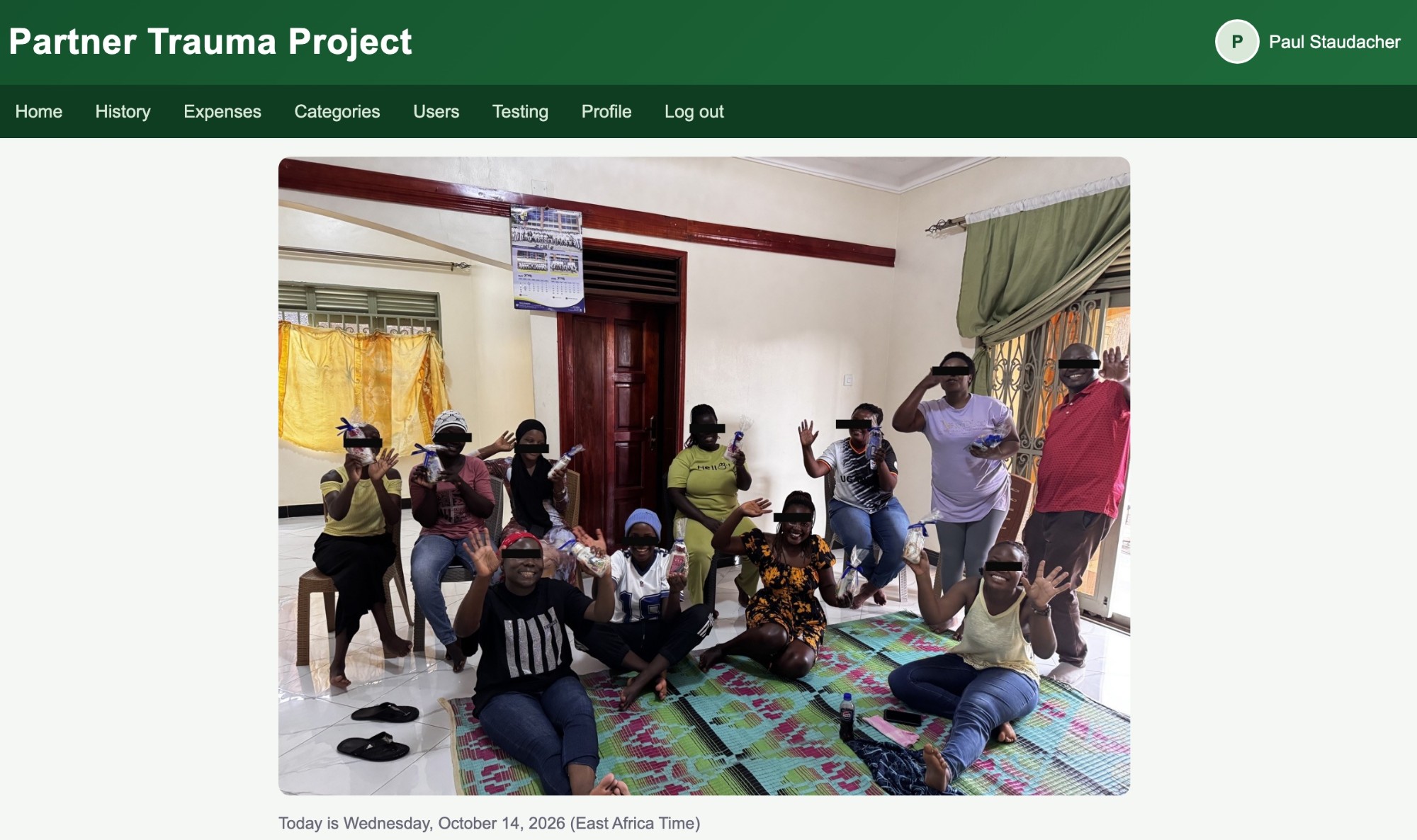
The system includes staff accountability, daily reporting, weekly planning, historical records, and expense tracking. It’s designed to work on virtually any device with a web browser.
Think about that. A customized application addressing a real organizational need, developed in one day.
Now, here’s an important part of the story. The application hasn’t yet been deployed for daily use. We encountered some organizational challenges within our own team around supporting its implementation. That experience reinforced something I learned long before AI came along: Technology can solve a technical problem, but people and leadership are still essential to making the solution successful.
Nevertheless, the ability to develop a working application that quickly and inexpensively is remarkable. And it opens possibilities for small organizations that simply haven’t had access to that level of technical capability before.
Translating Discipleship Materials With Spiritual Accuracy
One of the challenges at Empower Dreams is getting quality discipleship materials into the languages needed by our international ministry partners.
This is more complicated than simply translating words. Biblical meaning, spiritual concepts, and the intent of the original material must be preserved.
I’ve used AI to translate entire discipleship series into another desperately needed language, but the process wasn’t as simple as uploading a document and accepting whatever came back. I spent considerable time patiently working with the AI, explaining what I wanted, evaluating its output, correcting mistakes, and refining the process. It was deliberate, iterative work.
Eventually, we reached the point where the resulting translations passed our manual quality assurance testing for spiritual accuracy.
That’s an exciting accomplishment. Not simply because we translated a substantial amount of material, but because we developed a repeatable approach that could make future translation projects considerably more affordable and practical. For a ministry supporting indigenous Christian leaders in multiple countries, the potential is enormous.
And this experience taught me something that I think is worth emphasizing:
"The real power of AI often comes not from asking it a question, but from patiently teaching it how to accomplish something that matters."
— Paul Staudacher
That has become one of the guiding principles of how I work with AI.
Telling Our Partners’ Stories More Often
Here’s a smaller example from our own office that still makes me smile.
Empower Dreams communicates through this website, Facebook, Instagram, LinkedIn, and our newsletter. For a volunteer-driven organization, keeping all of those current was a real cost in time, and most months it simply didn’t happen. The stories were there; the hours weren’t.
I worked with AI to build a simple workflow instead. A story is written once. AI adapts it for each outlet, I review and approve every version, and the approved posts are scheduled and published from there, including the page you are reading now.
It may seem like a small accomplishment compared with translating ministry materials or developing custom software. But the range of tasks involved is the point: writing, editing, design, scheduling, and publishing, brought together without hiring outside help. And it means you hear from our partners more often than before.
The Opportunity Is Much Bigger Than Saving Time
These three projects have very little in common. One involved software development and organizational management. Another required careful translation of Christian discipleship materials. The third was ordinary office work.
But they illustrate a common principle. AI is putting capabilities within reach of small organizations that previously required specialized talent, significant budgets, or substantial amounts of time.
And these examples are only part of what I’ve been doing. I regularly use AI for financial analysis, budgeting, communications, office automation, strategic planning, software troubleshooting, and researching unfamiliar subjects. Sometimes it saves me a few minutes. Sometimes it saves hours. And sometimes it enables me to tackle something I wouldn’t have attempted before.
I don’t accept everything AI tells me. In fact, I’ve learned to question it, challenge its answers, refine my instructions, and test its results. The process is often more like working with a very capable but inexperienced assistant who needs clear direction and careful oversight.
But the results can be extraordinary.
Why This Matters So Much for Nonprofits
At Empower Dreams, we’ve intentionally built an organization with very little overhead. We’re volunteer-driven, and our board covers our administrative expenses so that the resources entrusted to us can support effective indigenous ministry leaders.
I’ve had the privilege of spending time with remarkable Christian leaders in Africa, Asia, and South America who are accomplishing extraordinary things with limited resources. They’re the ones doing the hard work of reaching people, making disciples, and transforming communities. Our role is to help them accomplish more.
Every efficiency we gain frees up resources for the mission. But I think the bigger opportunity is what AI allows us to do that we couldn’t do before.
A small nonprofit might not be able to afford a software development team, translation specialists for every language, or consultants for every technical challenge. AI doesn’t eliminate the need for human expertise and good judgment. But it can dramatically expand the capabilities of the people already involved.
For nonprofits, that can be a game changer.
AI Still Needs Leadership, Wisdom, and Discernment
Having spent decades in technology and business leadership, I’ve learned to be both enthusiastic and skeptical about new technologies.
AI can be wrong. Sometimes spectacularly wrong. And it can sound remarkably confident while being wrong!
You still have to understand the problem, establish the requirements, evaluate the results, and take responsibility for the outcome. Our experience with the Uganda management application also illustrates that developing a solution and successfully implementing it are two different things. Technology cannot replace organizational commitment, accountability, and leadership.
And in Christian ministry, it certainly cannot replace relationships, compassion, prayer, spiritual discernment, or the work of the Holy Spirit.
But when used thoughtfully, AI can make the people doing that work far more effective.
We’re Just Getting Started
I believe we’re still in the earliest stages of discovering what AI can make possible for small nonprofits and ministries.
One of the things Silicon Valley taught me is that the organizations that benefit most from new technologies aren’t necessarily the ones with the biggest budgets. They’re often the ones willing to experiment, learn quickly, challenge assumptions, and rethink how things have always been done.
You don’t need an electrical engineering degree or decades of technology experience to begin. You do need curiosity, patience, good judgment, and a willingness to experiment.
Here’s my challenge to other nonprofit leaders. Think about something your organization needs but hasn’t been able to accomplish because you lack the time, money, or specialized talent. Then ask a different question.
Not simply, "Can AI help me do my current work faster?"
But "What could we accomplish with AI that we haven’t even considered possible?"
I believe that’s where some of the greatest opportunities lie.
As Christians, we’re called to be good stewards of the resources God has entrusted to us. I see AI as another tool that, when used wisely, can help us do that. My goal isn’t to build bigger organizations. It’s to help our organizations accomplish more of what God has called us to do.
And after decades of working with new technology, I have to say I’m genuinely excited about what’s ahead.
If you lead a nonprofit or ministry, I’d love to hear from you. What’s the most remarkable thing you’ve been able to accomplish with AI? And what opportunities do you see that we might be missing?
Paul Staudacher is the Founder, CEO, and Board Chairman of Empower Dreams and also serves as Board President of Giving Grace, a North Texas ministry. With decades of business leadership experience in Silicon Valley high-tech startups, he brings a combination of technical understanding, business experience, and a passion for Christian ministry to nonprofit leadership.
Empower Dreams pays no salaries and covers its own operating expenses, so every dollar donated fuels mission impact through our partners.